Description:
ECHO is based on a decade of research by North Carolina State University’s Natural Learning Initiative on the Preventing Obesity by Design model. This research showed that by improving the design of outdoor spaces through affordable interventions and training early childhood professionals, young children and early childhood programs enjoy substantial benefits.
Together, ECHO and ECCLA are building a supportive technical assistance network across Colorado. ECCLA engages our network of 34 Early Childhood Councils to deepen regional expertise around healthy outdoor learning environments and serves as a primary conduit to the early childhood education community to build recognition, participation, and support for ECHO. We support the development of a long-term strategy that engages policy makers, child care providers, and other early childhood professionals that may contribute to the quality, programming, and management of outdoor learning environments in Colorado.
Primary Role of Program in Early Childhood Systems:
Service Area(s):
Adams, Alamosa, Arapahoe, Archuleta, Baca, Bent, Boulder, Broomfield, Chaffee, Cheyenne, Clear Creek, Conejos, Costilla, Crowley, Custer, Delta, Denver, Dolores, Douglas, Eagle, El Paso, Elbert, Fremont, Garfield, Gilpin, Grand, Gunnison, Hinsdale, Huerfano, Jackson, Jefferson, Kiowa, Kit Carson, La Plata, Lake, Larimer, Las Animas, Lincoln, Logan, Mesa, Mineral, Moffat, Montezuma, Montrose, Morgan, Otero, Ouray, Park, Phillips, Pitkin, Prowers, Pueblo, Rio Blanco, Rio Grande, Routt, Saguache, San Juan, San Miguel, Sedgwick, Southern Ute Indian Tribe, Summit, Teller, Ute Mountain Ute Tribe, Washington, Weld, Yuma
Population(s) Served:
Caregivers, Infants, Newborn, Preschoolers, Teachers, Toddlers
Outcome-Based Activities The Program/Initiative Provides:
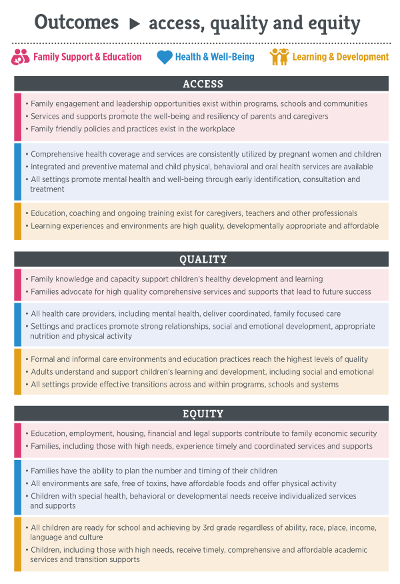
Settings and practices promote strong relationships, social and emotional development, appropriate nutrition and physical activity
View more programs in Quality Settings and Practices
All environments are safe, free of toxins, have affordable foods and offer physical activity
View more programs in Safe, Stable Physical Environments
Education, coaching and ongoing training exist for caregivers, teachers and other professionals
View more programs in Education/Training for Professionals
Learning experiences and environments are high quality, developmentally appropriate and affordable
View more programs in Quality/Affordable Learning Environments
Program evaluates effectiveness of activities and services:
No
Organization Details:
Early Childhood Council Leadership Alliance
4891 Independence Street
Suite 140
Wheat Ridge,
Colorado
80033